

100+ rich categories with a wide range of certifications
hot keywords:

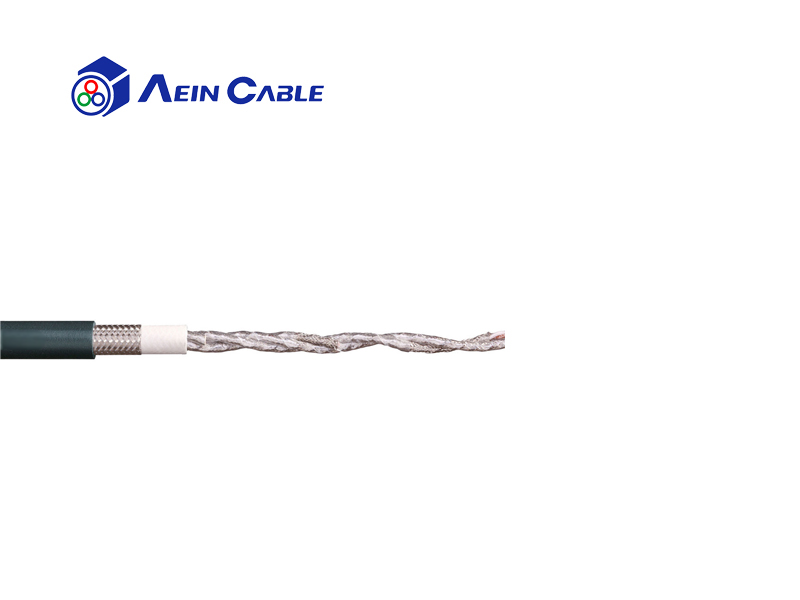
Alternative IGUS Cable CF112 Data Cable

Alternative IGUS Cable CF112 Data Cable

Typical application areas

 For heaviest duty applications 

 Almost unlimited resistance to oil, also with bio-oils 

 Indoor and outdoor applications, UV resistant

 Unsupported and gliding travel distances up to 1,312 ft (400 m) and more

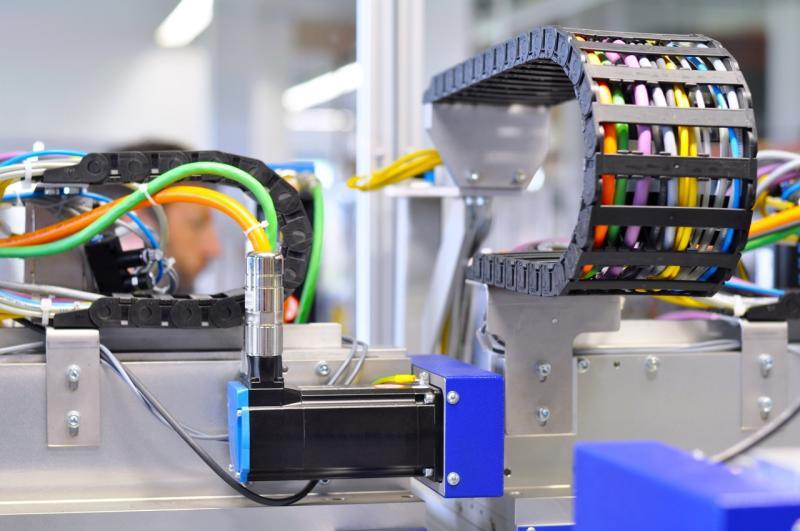
 Machining centres / machine tools, storage and retrieval systems, packaging industry, quickhandling, refrigerating areas


inquiry
  • Product details
Product introduction
  • 01 Product application
      Typical application areas
      • For heaviest duty applications
      • Almost unlimited resistance to oil, also with bio-oils
      • Indoor and outdoor applications, UV resistant
      • Unsupported and gliding travel distances up to 1,312 ft (400 m) and more
      • Machining centres / machine tools, storage and retrieval systems, packaging industry, quick
        handling, refrigerating areas
  • 02 Product characteristics •Conform to RoHS standard
    •UV resistance
    •Flame retardant acc. to CSA C22.2 No.2556-15 FT2
    •Oil resistance conform to UL1581:IRM 902. DIN EN 60811-1-2
    •Strong tolerance to oils, coolants and lubricants
  • 03 Technical certification

    Conform to  UL&CUL standard UL758,CSA C22.2 No. 210

    •Conform to 2014/35/EU-Guideline (''Low voltage Directive'') CE

    •We are pleased to produce special versions, other dimensions, core and jacket colours on request.

Product structure
Dynamic information

Min. bend radius, e-chain® (factor)

10.0 x d

Min. bend radius, e-chain®

3.7 inch (95.0 mm)

Min. bend radius, flexible (factor)

8.0 x d

Min. bend radius, flexible

3.0 inch (76.0 mm)

Min. bend radius, fixed (factor)

5.0 x d

Min. bend radius, fixed

1.9 inch (47.5 mm)

Temperature, e-chain® min.

-13 °F (-25 °C)

Temperature, e-chain® max.

176 °F (80 °C)

Temperature, flexible

-40 °F to +176 °F (-20 °C to +80 °C)

Temperature, fixed

-58°F to +176°F (-50°C to +80°C)

v max., unsupported

33 ft/s (10 m/s)

v max. gliding

16 ft/s (5 m/s)

a. max.

262.5 ft/s² (80 m/s²)

Length of travel

Travels up to 328 ft (100 m)


Cable structure

Conductor

Very finely stranded special cores of particularly high-flex design made of bare copper wires.

Conductor insulation

Mechanically high-quality TPE mixture

Conductor construction

2 cores each stranded in pairs with short pitch lengths, core pairs also stranded with short pitch lengths.

Conductor identification

Colour code according to DIN 47100

Element shield

Extremely bending-resistant braiding made of tinned copper wires. Coverage approx. 70% linear, approx. 90% optical.

Inner jacket

PUR mixture suited to the requirements in e-chains®

Overall shield

Extremely bending-resistant braiding made of tinned copper wires. Coverage approx. 70% linear, approx. 90% optical.


Unshielded

No

Outer jacket

Low-adhesion, halogen-free, highly abrasion-resistant mixture on the basis of PUR, adapted to suit the requirements in energy chains® (following DIN EN 50363-10-2).


Jacket color

Anthracite grey (similar to RAL 7016)


Recommended news

  • What Is a Servo Cable? A Beginner's Guide

    What Is a Servo Cable? A Beginner's Guide

    Everything You Need to Know Before Choosing the Right Servo Motor Cable If you're new to industrial automation, CNC machinery, or robotics, you've probably come across the term servo cable. But what exactly is a servo cable, and why is it so important? Many people assume that any industrial cable can connect a servo motor. In reality, using the wrong cable can lead to signal interference, equipment downtime, poor motion accuracy, and even premature cable failure. In this beginner-friendly guide, we'll explain what a servo cable is, how it works, the different types available, and what you should consider before purchasing one. Whether you're an equipment manufacturer, system integrator, distributor, or engineer, this guide will help you make a smarter choice.

  • What are the dangers of substandard wire and cable?
  • What are the characteristics of the drag chain cable? What matters should be paid attention to ?

Contact us