What Is a Robot Cable?
A robot cable is designed specifically for robotic applications where cables are exposed to repeated, multi-directional movement.
Unlike a traditional cable that may only bend occasionally, a robot cable can be required to:
-
Bend thousands or millions of times
-
Twist continuously
-
Move in multiple directions
-
Follow the movement of a robot arm
-
Operate in tight spaces
-
Withstand mechanical stress and vibration
This makes robot cables particularly important in applications such as: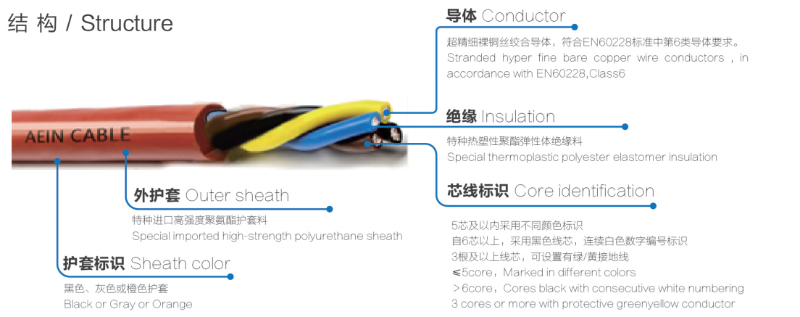
-
Industrial robots
-
Robotic arms
-
Pick-and-place systems
-
Welding robots
-
Assembly robots
-
Automated production lines
-
Material handling systems
The key characteristic is flexibility under complex, repeated motion.
A robot cable is not simply a "flexible cable." It is engineered to survive a specific motion profile over a long service life.
What Is a Servo Cable?
A servo cable is primarily designed to connect a servo motor with a servo drive or controller.
Servo systems require reliable transmission of both power and control signals.
Depending on the design, a servo cable may include: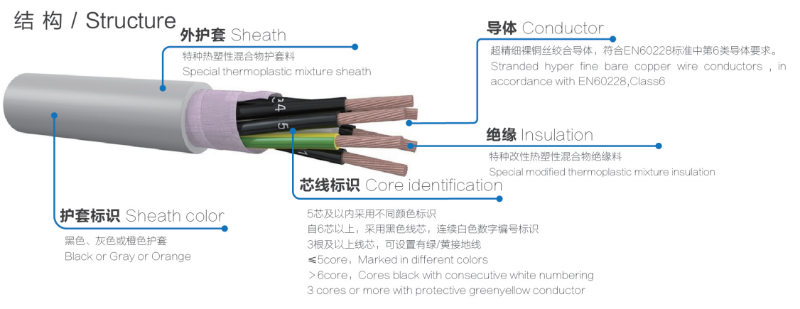
-
Power conductors
-
Protective grounding
-
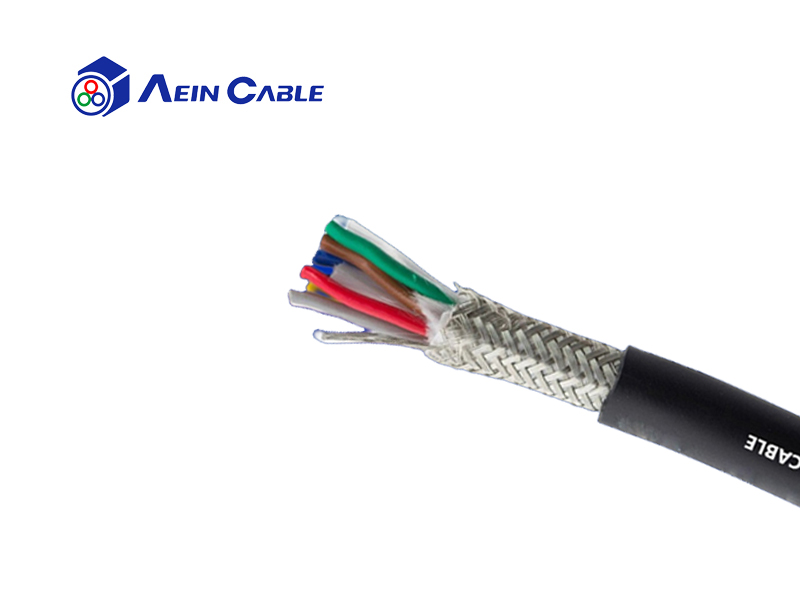
Shielding
-
Brake conductors
-
Feedback or encoder conductors
Servo cables are commonly used in:
-
CNC machines
-
Industrial machinery
-
Packaging equipment
-
Automated production lines
-
Motion control systems
-
Conveyor systems
-
Servo motor applications
The key characteristic of a servo cable is reliable power and signal transmission for precision motion control.
Robot Cable vs Servo Cable: The Key Differences
So, what separates the two?
The easiest way to understand the difference is to look at their primary design priorities.
However, there is an important point:
The difference is not simply "robot cable = flexible" and "servo cable = power."
Modern automation systems can require cables that combine both electrical performance and extreme mechanical flexibility.
1. Movement Is One of the Biggest Differences
The first question you should ask is:
How will the cable move?
A servo cable installed on a fixed machine may experience relatively limited movement.
A cable installed inside a robotic arm can experience:
Bending + twisting + pulling + vibration + repeated movement.
This is a much more demanding environment.
For example, imagine a six-axis industrial robot.
As the robot moves, the cable may rotate around joints repeatedly. The cable needs to tolerate this movement without excessive mechanical stress on the conductors, insulation, shielding, or jacket.
That's why robotic applications often require cables with excellent torsion resistance and flexing performance.
2. Servo Applications Often Require Strong Signal Integrity
Servo systems are designed for precise motion control.
The servo drive needs accurate information from the motor and feedback devices.
If electrical interference affects the signal, the system may experience:
-
Position errors
-
Communication problems
-
Motor instability
-
Unexpected alarms
-
Reduced motion accuracy
For this reason, shielding is often an important consideration when selecting a servo cable.
A properly designed shield can help reduce electromagnetic interference (EMI) and protect sensitive signals in electrically noisy industrial environments.
This is especially important when high-power motor cables are installed close to control or feedback cables.
3. Robot Cables Need to Survive Mechanical Stress
Electrical performance is only part of the story.
For robotic applications, mechanical durability can be equally important.
A robot cable may experience repeated:
Flex → Twist → Flex → Twist → Repeat
for thousands or millions of cycles.
If the cable construction is not designed for this type of movement, common problems can include:
-
Conductor fatigue
-
Insulation cracking
-
Shield damage
-
Jacket wear
-
Increased electrical resistance
-
Intermittent signal problems
-
Complete cable failure
And the cost of cable failure is rarely limited to the cable itself.
If a robotic production line stops, the resulting downtime can be significantly more expensive than the original cable.
4. A Servo Cable Can Also Be Used in Moving Applications
This is where cable selection becomes more interesting.
Not every servo cable is designed for continuous movement.
Some servo cables are intended for:
Fixed installation or occasional movement.
Others are specifically designed for:
Continuous flexing in cable chains or moving machinery.
Therefore, simply seeing the words "servo cable" does not automatically mean the cable is suitable for robotic motion.
Always check the manufacturer's specifications for:
-
Minimum bending radius
-
Flexing cycles
-
Torsion resistance
-
Travel speed
-
Acceleration
-
Temperature range
-
Shielding
-
Installation method
5. Robot Cable and Servo Cable Can Overlap
In modern automation systems, the boundary between these two cable types is not always clear.
For example, a robotic system may contain:
-
Servo motor cables
-
Encoder cables
-
Control cables
-
Power cables
-
Data cables
-
Brake cables
A robot manufacturer may require these cables to withstand both continuous motion and torsional movement.
In this situation, you may need a cable specifically designed for robotic applications rather than a standard servo cable.
In other words:
The cable should be selected according to the actual movement and electrical requirements — not simply according to the machine name.
Which One Should You Choose?
Here's a simple way to think about it.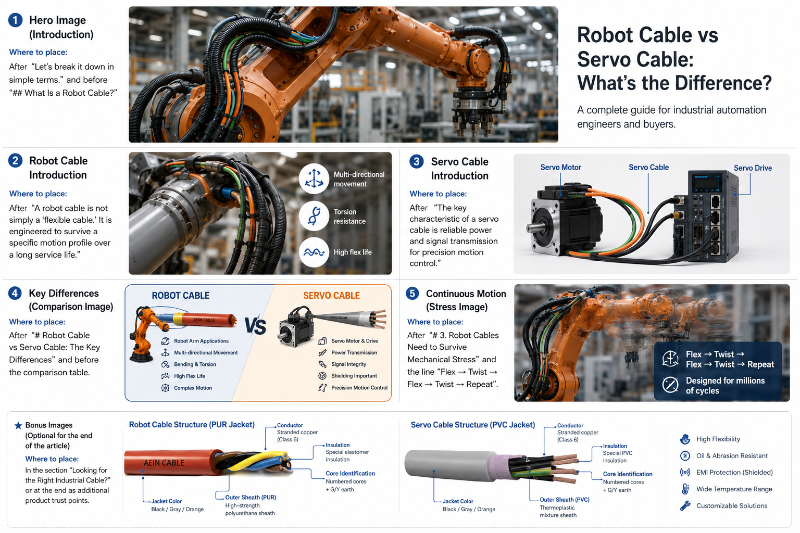
Choose a Robot Cable When:
Your application involves:
-
Robot arms
-
Multi-axis robots
-
Continuous torsional movement
-
Repetitive bending
-
Dynamic robotic joints
-
High-cycle movement
-
Complex three-dimensional cable routing
The priority is usually mechanical flexibility, torsion resistance, and long flex life.
Choose a Servo Cable When:
Your application involves:
-
Servo motors
-
Servo drives
-
CNC equipment
-
Motion-control systems
-
Automated machinery
-
Motor power and feedback transmission
What If Your Servo Cable Is Installed on a Robot?
This is an important situation.
If the servo cable will be installed inside a robotic arm, you shouldn't select it based only on its electrical specifications.
You should also verify whether it is specifically rated for:
continuous flexing and torsional movement.
A cable that performs perfectly on a stationary machine may have a much shorter service life inside a moving robot.
6 Questions to Ask Before Buying a Robot or Servo Cable
Before choosing a cable, ask these six questions:
1. How does the cable move?
Is it:
-
Fixed?
-
Flexing?
-
Drag-chain movement?
-
Torsional movement?
-
Multi-axis robotic movement?
2. How many cycles are required?
A machine operating 24/7 may generate millions of bending cycles over its service life.
Cycle life should therefore be considered during cable selection.
3. What is the bending radius?
A smaller bending radius creates greater mechanical stress.
Always compare the application's actual bending radius with the cable manufacturer's recommended minimum bending radius.
4. Is shielding required?
If the cable carries sensitive signals or operates near high-power equipment, shielding may be necessary to reduce electromagnetic interference.
5. What environmental conditions will the cable face?
Consider:
-
Temperature
-
Oil
-
Coolant
-
Chemicals
-
Welding sparks
-
Abrasion
-
Outdoor exposure
-
Moisture
The jacket material should match the environment.
6. Does the manufacturer provide application-specific specifications?
Don't rely only on the product name.
A good industrial cable specification should clearly indicate relevant information such as:
-
Conductor construction
-
Insulation material
-
Jacket material
-
Voltage rating
-
Temperature range
-
Bending radius
-
Flexing capability
-
Shielding
-
Torsion performance
-
Applicable standards
Why Cable Selection Matters More in Automation
In industrial automation, a cable may represent only a small percentage of the total machine cost.
But its failure can stop an entire production process.
Imagine a robotic assembly line operating continuously.
If one cable fails, the consequences may include:
Cable failure → Robot stops → Production stops → Maintenance required → Downtime cost increases
This is why choosing a cable based only on the lowest purchase price can be risky.
The better question is:
What is the total cost of the cable over its operating life?
A slightly more expensive cable with better flex life may ultimately cost less than repeatedly replacing an unsuitable cable.
Robot Cable vs Servo Cable: It's Not About Which One Is Better
There is no universal winner.
Robot cable isn't automatically better than servo cable.
And servo cable isn't automatically better than robot cable.
They are designed around different application requirements.
The right choice depends on:
Motion + Electrical Requirements + Environment + Service Life
If your cable needs to handle continuous twisting and multi-axis robotic movement, look for a cable specifically designed for robotic applications.
If your primary requirement is connecting a servo motor and drive with reliable power and feedback transmission, a suitable servo cable may be the better choice.
And if your servo cable will also experience continuous robotic movement, make sure the cable is specifically rated for that mechanical environment.
Looking for the Right Industrial Cable?
At AEIN, we manufacture and supply cables for demanding industrial applications, including:
-
Robot cables
-
Servo cables
-
Drag chain cables
-
Encoder cables
-
Control cables
-
Flexible industrial cables
-
Custom cable solutions
Different machines have different requirements.
That's why cable selection should start with your application, not just a product name.
If you know your application, movement type, voltage, bending radius, operating environment, and required certifications, a suitable cable can be selected much more accurately.
The right cable doesn't just carry power or signals — it helps keep your automation system running reliably.